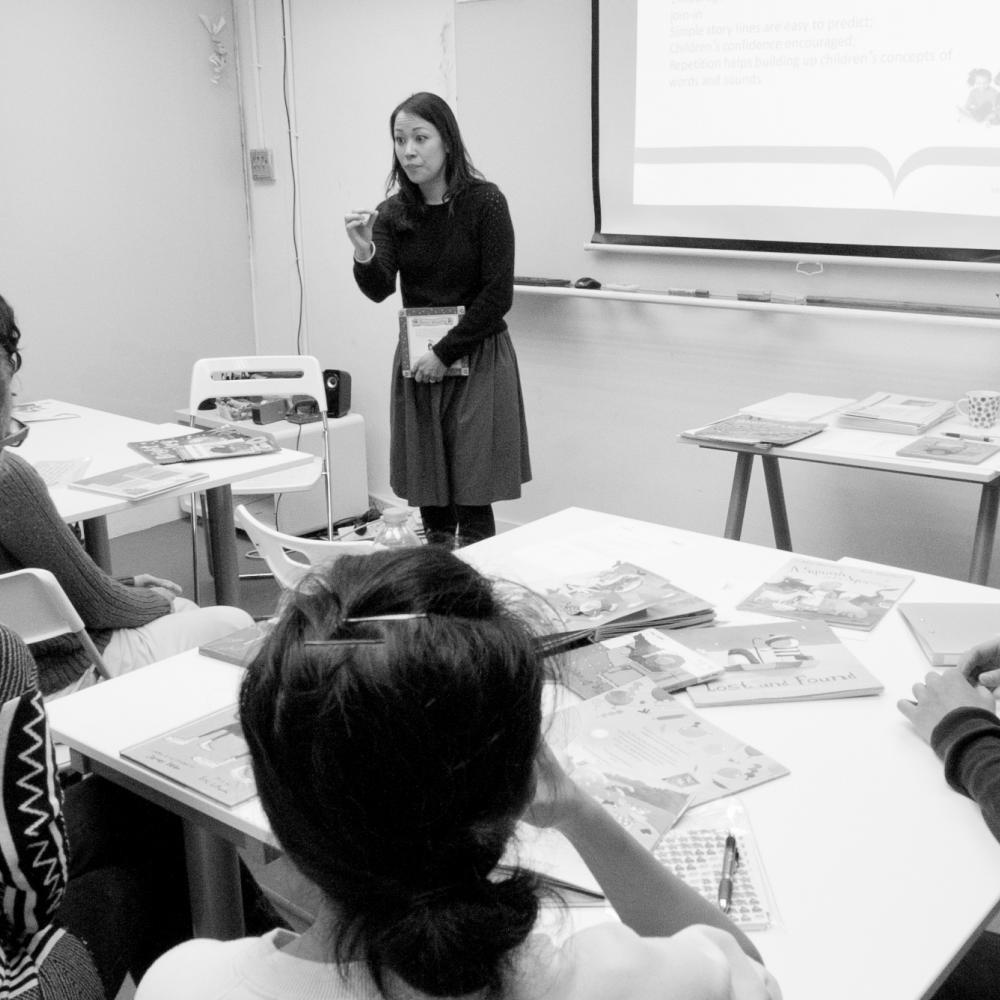
3 Key Takeaways from the Teaching Young Learners Extension Certificate (TYLEC) Course
Laura Wilkes
Earlier this year, I stepped back into the primary school classroom to teach two groups of young learners (one group of mostly P3s and another group of P6s) as part of my studies and assessment on the Trinity College London Teaching Young Learners Extension Certificate (TYLEC) course. Even though I’ve taught young learners before and completed my DipTESOL years earlier, I was surprised by how much I leveled up my skills and knowledge in teaching as a result of this young learners…
All categories, Certificate courses, Teaching skills
How to teach writing: writing lesson ideas
James Pengelley
So you're looking for writing lesson plan ideas, and you're not sure where to start.
Does any of this sound familiar?
Yes, but writing is boring.
Is it?
Sure, but writing could be time spent in class doing fun speaking tasks.
Who said you can’t do both?
But my students get more out of class from interactive activities.
Exactly – writing lessons don’t have to conform to any of these assumptions. Indeed, there are many reasons why giving students a written task may be better for their…
All categories, Teaching skills, How to..., Certificate courses, ESL activities
Gamification in English language teaching: more than child's play
Sharon Maloney
Ever feel like your students are stultifying, bored and demotivated? Maybe it’s not the subject, but your teaching.
Competing for the splintered attentions of our learners has never been harder. It has now become a chronic situation, familiar to all teachers when struggling to motivate learners. There is now a generation of children who have never known a world without videogames, mobiles and the internet. The demographics of the workforce now mean that those retiring are…
All categories, Certificate courses, How to..., ESL activities, Diploma courses, TESOL Masters
Teaching pronunciation: an introduction to the IPA
Bryan Holmes
The IPA stands for the International Phonemic Alphabet and is used in ESL to address pronunciation issues by isolating difficult vowel sounds, consonants or diphthongs. Problem areas can then be addressed by identifying the manner (the way in which the sound is produced), place (position of the tongue, teeth, lips, etc.), and voice (use of the vocal cords). While some ESL instructors find the IPA intimidating, others see it as a useful tool.
What is the IPA good for?
The IPA is separated into…
All categories, Certificate courses, How to..., Five ways to
Integrating skills in English language classes
Bryan Holmes
English language teaching can be separated into systems, skills, and phonology. Systems refer to grammar, whereas skills denote reading, writing and listening, and speaking. Phonology incorporates elements of pronunciation, such as intonation, connected speech, and isolating difficult phonemes which focus on manner (position of the mouth), place (position of the tongue), and voice (voiced or unvoiced).
In reality, our students rarely use English skills in isolation: they rarely…
All categories, How to..., Teaching skills, ESL activities
How to teach intonation
Bryan Holmes
Many non-native English speakers have problems recognizing and using the different intonation patterns in English. For an instructor, it’s crucial to raise the learners’ awareness of intonation because it performs a function, as well as indicating an emotion. Teaching this aspect of phonology is often an area overlooked by teachers and something that often confuses students because the key meaning of what is being said is not encoded in the meaning of the words, but rather the sound of…
All categories, Certificate courses, How to..., ESL activities, Diploma courses, TESOL Masters
Receptive skills for English teachers: how to teach listening and reading
Bryan Holmes
‘Receptive Skills’ (also known as ‘Passive Skills’, or reading and listening) are often contrasted with productive skills (speaking and writing). When learning a new language learners tend to develop their receptive skills first and then acquire productive capability. It’s a complex relationship between the two as they all play a supporting role with developing other skills. For example, reading skills can be a supporting factor to the development of writing…
All categories, How to..., Certificate courses, Diploma courses, ESL activities
How to exploit reading texts for TEFL classes
Bryan Holmes
Teaching TEFL classes in Hong Kong can present a bit of a conundrum. In a culture that prioritises grammar instruction and accuracy over fluency, reading tasks are often seen as a series of questions to which the answers simply need to be copied straight from the text. However, reading comprehension texts for ESL learners create opportunities to integrate a variety of English sub-skills. For example, listening and speaking skills or exploiting a language or vocabulary aim. How a…
All categories, ESL activities, How to..., Teaching skills
The importance of context for English teaching: experience, situation and surrounding language
Tom Garside
Whenever we use language, whether we are speaking, listening, reading or writing, we do it in some kind of context. The situation we are in, the tone we want to express and the ways that others respond to us all affect the nature of the language choices that we make. Language without context lacks important reference points for meaning, and so is simply not as effective in communicating what we want to say. This is something that we must bear in mind as teachers, and something that our…
All categories, Certificate courses, Diploma courses, How to...
Top 10 Interview questions to identify great English language teachers
Tom Garside
It is a common misconception that people who grow up in English speaking environments are automatically qualified to teach English. If you are recruiting teachers to work at your centre, here are some key questions that will tell you more than you think about prospective teachers.
Register for our next Teaching skills or CertTESOL Taster Workshops here.
1) Why did you choose to get into teaching?
People get into TESOL for a range of reasons, both positive and negative. Someone who just wants…
All categories, Careers in TESOL
What are the 4 written assignments on the Trinity CertTESOL course?
Sean Martin
As much as many of you will sigh at the thought of written assignments, yes, there are assignments and they form the spine of the Trinity CertTESOL. There’s no getting away from it. The course is accredited at level 5 on the UK National Qualifications Framework, is equivalent to the first year of undergraduate study at a UK university, so does require a high standard of academic writing. Accurate and appropriate referencing of sources is required; plagiarism is taken very seriously. But,…
All categories, Certificate courses, Teaching skills
English or Englishes: are varieties of English important for learners?
Tom Garside
Over the past 200 years or so, English has grown to become the lingua franca (shared language) in a huge range of industries. The fields of media, engineering, medicine, shipping, air travel, international business and commerce all rely on English as the common language which can facilitate communication between countries anywhere in the world. Globally, by far the majority of international communication occurs in English between non-native speakers of English, between individuals,…
All categories, How to..., Certificate courses, Diploma courses, TESOL Masters