




7th March 2026
In our ‘Inclusive Teaching for Learners with SEN’ series, we will be exploring how to support our diverse communities of learners, how to build an inclusive classroom, and how to identify potential needs. Most importantly, we will be equipping ourselves with practical and tangible strategies to cater for those needs.
This first post will look at developing a clearer understanding of special educational needs (SEN) and the initial steps to take towards an inclusive classroom.
The Classroom Reality
Let’s take a moment to first reflect on a scenario every educator has faced. You are in your English lesson, and your learners are not listening. One learner can’t sit still and is disrupting those around them. Another learner is fidgeting with anything they can get their hands on. A group are talking to each other at the back. You feel frustrated because you can’t get anyone’s attention, and no-one is taking part in your activity.
First, we need to ask ourselves the ‘why’? Why are my learners not listening? What can I do differently to help them engage? What barriers to learning do I need to remove? How can I adapt the environment to suit all needs?
These are the questions we will be answering together.
What is SEN?
SEN means that some students learn differently and need tailored support to succeed.
According to the SEND Code of Practice, ‘a child or young person has SEN if they have a learning difficulty or disability’ that calls for ’provision that is additional to or different from that made generally for other children’.
In other words, a learner has special educational needs (SEN) if they struggle to learn in ways that are different from other learners or have a disability that affects how they learn.
The key part is that these students need extra help or different teaching methods that go beyond what some classrooms typically provide. For example:
- A student who struggles with reading might need one-on-one instruction.
- A student with hearing loss might need a sign language interpreter or special seating.
- A student with dyslexia might use text-to-speech tools.
The purpose of identifying a special educational need is to determine what action the school should take to address barriers to learning. Identification should not be intended to fit a child into a category.
Being able to effectively support every child in your classroom is an essential part of any educator’s job.
Universal Good Teaching
Key global trends in SEN education for 2025-2026 are dominated by a substantial increase in identified needs and a rising demand on educators as the number of children identified with SEN continues to rise.
We could look closer at the reasons why we see these trends (improved identification and diagnosis, impact of COVID-19, environmental factors, medical advances etc.), but the prevailing aspect here is that ‘good teaching’ should be universal. It is crucial we are equipped with the skills and knowledge to be able to support every learner in our classrooms.
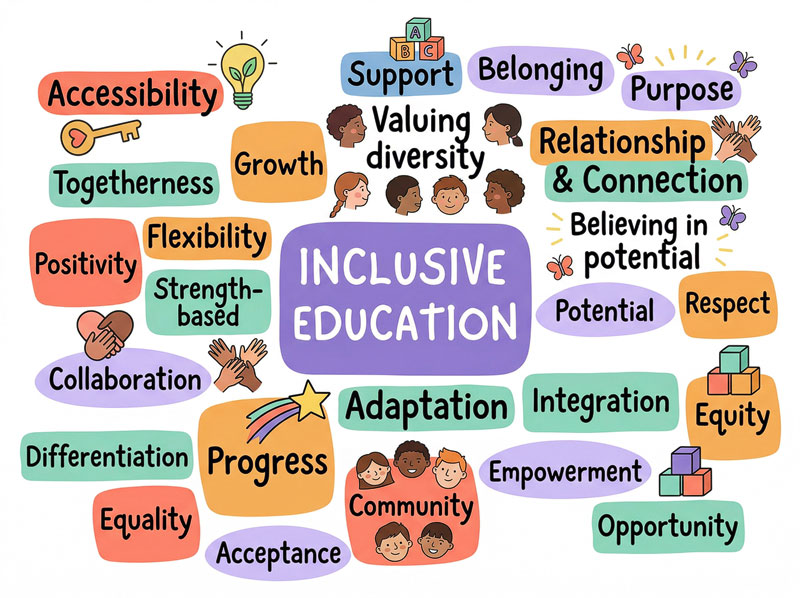
Inclusive education is…
Your Mindset Matters
Supporting learners with SEN begins with reflecting on your practice and establishing an inclusive mindset. Believe in every child’s potential and create classrooms that nurture the strengths of all learners.
Language Matters
Developing an inclusive mindset is understanding that language matters. Students are not defined by their special educational needs.
Let’s avoid using terms such as ‘SEN child’ or ‘pupil is SEN’, and instead notice that a ‘pupil has SEN’. Instead of disparagingly stating ‘there are so many SEN pupils in my class’, let’s notice with care and curiosity that ‘there are pupils with SEN in my class’.
Certain language can undermine efforts to establish high expectations for the learning of our pupils. SEN is not a fixed or permanent characteristic; it is a recognition that at a specific time a child has additional learning needs.
Adopt Neuro-Affirming Language
Use language that accepts neurodiversity as natural human variation, not something to ‘fix’.
This is crucial because it shifts focus from disorders that are ‘wrong’ or need to be ‘fixed’ to a strength-based inclusive approach that validates all learners. Inclusive language builds self-esteem, reduces stigmas, creates safer environments, and allows us to build meaningful connections with our learners.
Inclusive Education: Better for Everyone
Inclusive classrooms improve academic performance for all learners while building social-emotional skills like collaboration, empathy, and resilience. When students learn alongside peers with diverse abilities and backgrounds, they develop emotional intelligence that extends beyond academics.
Inclusive education creates a fundamental sense of belonging for all learners, which is essential for wellbeing and long-term success. By using inclusive practices, educators are also breaking down harmful stereotypes and prejudices by normalising diversity and individual differences. We encourage young learners to see each other as individuals first, which builds a more accepting and understanding society.
Educators benefit too. Research shows those in inclusive environments report higher job satisfaction and professional growth. Inclusive practice motivates reflective teaching, expanding skills, collaboration, and innovation. Everyone involved gains positive outcomes.
Building Inclusive Classrooms: Four Essential Elements
1. Collaboration
- Work closely with the child, families, caregivers, other educators, support staff, and specialists.
- Build the child’s ‘team’ working towards shared outcomes.
- Find out what supports are available and advocate for what’s in the child’s best interests.
For example, an Individual Education Plan built collaboratively with the child, the family, teaching staff, in consultation with any specialists. This ensures that everyone is aware of strengths and emerging skills and working towards the same goals.
2. Flexibility
- Move beyond one-size-fits-all instruction.
- Offer choices in how children learn and demonstrate understanding.
- Vary how content is taught.
- Design curriculum to fit all learners, rather than trying to change learners to fit the curriculum.
- Remove barriers to learning – the environment is the problem, not the child.
For example, instead of structuring your lesson with solely adult-led input, providing a Classroom Carousel is a more active learning technique, where all learners can be involved in hands-on experiences. Small groups will rotate between stations set up with different prompts, activities, or questions.
3. Responsive Teaching
- Continuously observe, assess, and adjust instruction in real time.
- Create multi-sensory learning experiences (visual, auditory, kinaesthetic, tactile).
- Ensure all learners can access content and engage.
For example, incorporate short physical or sensory breaks to help with focus and regulation, such as a sensory circuit, particularly when you feel your learners are particularly ‘wriggly’ or loosing focus.
4. Thoughtfully Designed Environment
- Support regulation, safety, and security.
- Use clear routines and visual schedules.
- Provide calming spaces when needed.
- Offer flexible seating, fidget tools, and sensory supports.
- Remember: movement and fidgeting aids regulation and learning for some children.
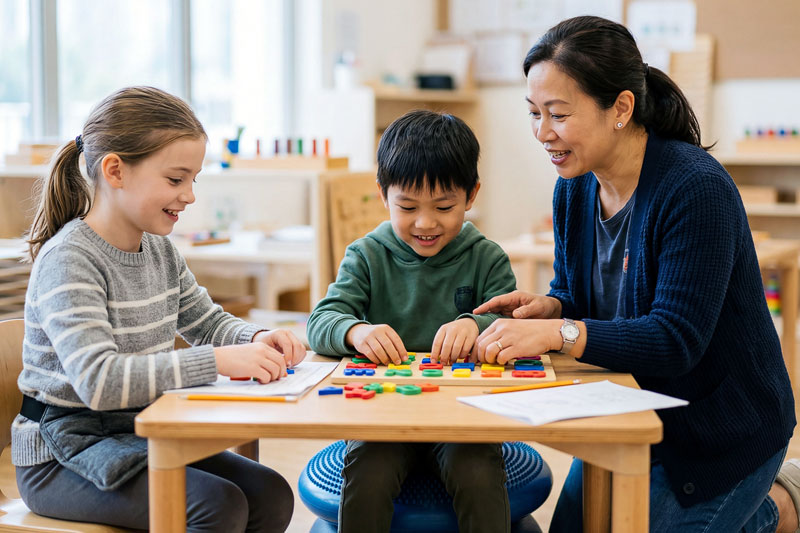
For example, have wobble cushions/stools, rocking chairs, or therapy balls available for your learners who need support with sitting. Even something as simple as reversing a standard chair to allow a student to lean forward on the backrest for extra chest support can make a huge difference. Be mindful that some learners learn differently, and that can include how they sit.
The goal is not to “fix” the child to fit the curriculum.
The goal is to shape the curriculum so more learners can access it.
When we remove barriers in the environment, we shift the focus away from “What’s wrong with this child?” to “What can I adjust in this space?”
When these four elements come together, inclusive classrooms become spaces where every student can thrive.

Lead by Example: One Classroom at a Time
Many of you likely believe in inclusive education but find yourselves surrounded by others who do not place the same value on it. This can be really difficult to navigate and often frustrating.
Even if you feel like you are fighting a losing battle, remember that you are on the positive side, where diversity is celebrated, everyone feels a sense of belonging, and a supportive and respectful community is being grown.
Let other educators see the positive outcomes and success in your classroom as you believe in your learners and do everything in your power to help them succeed. Lead by example!
Let them hear you talking positively about a child with SEN in the staff room. Be the child’s advocate. Be the person who believes in them. Be the educator who listens and understands. Be the reason that child looks forward to coming to school.
More from Amy's Inclusive Teaching series
Identifying and Supporting SEN in the Classroom
How to Support SEN – Communication and Interaction Needs
How to Support SEN – Cognition and Learning Differences
How to Support SEN – Understanding Sensory Needs
Supporting Learners with Social, Emotional and Mental Health Needs