


30th June 2026
In our ‘Inclusive Teaching for Learners with SEN’ series, we’ve explored communication needs, cognition and learning, and sensory needs. Now, we are looking at arguably one of the most important aspects of SEN in our Hong Kong context – Social, Emotional and Mental Health (SEMH) needs.
Picture this: A child sits at their desk, head down, refusing to take part. They’re not struggling with the content – they can do the work. But something else is happening beneath the surface. Maybe they’re anxious about making mistakes. Maybe they’re overwhelmed by social pressures. Maybe they’re carrying stress from home that no one knows about. Maybe they’re struggling with their sense of self-worth. You can see the struggle in their eyes, but you’re not quite sure how to reach them.
The Interconnected Nature of SEN
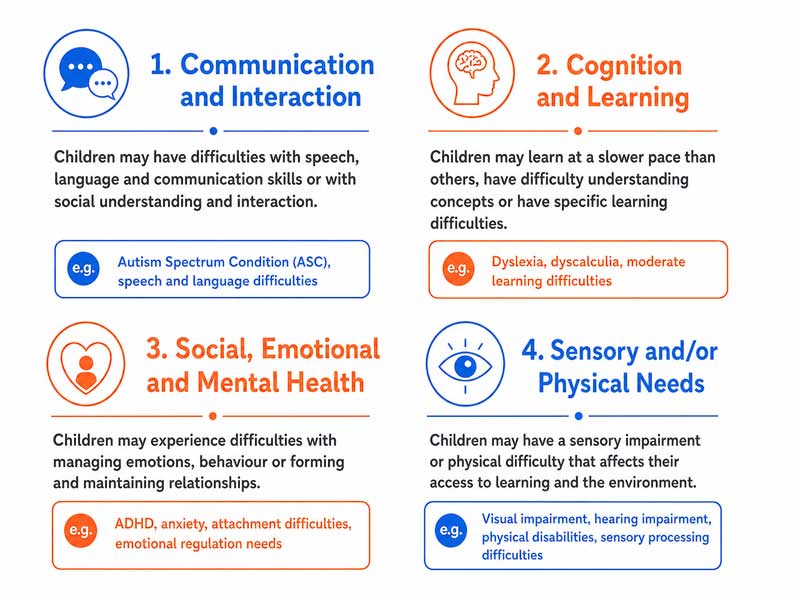
It’s important to understand that the four areas of SEN don’t exist in isolation. A learner with communication needs might develop anxiety about speaking. An individual with learning difficulties might struggle with self-worth. A learner with sensory needs might feel isolated or overwhelmed, leading to emotional withdrawal.
In Hong Kong's high-pressure academic environment, where competition is fierce and expectations are relentless, these interconnections become even more critical. A learner who is already struggling with cognition and learning may develop anxiety about failure. A child with sensory sensitivities may become emotionally dysregulated in an overstimulating classroom. The mental health and emotional wellbeing of our learners underpins everything else – it is the foundation upon which communication, learning, and sensory regulation can flourish.
Understanding Social, Emotional and Mental Health Needs (SEMH)
Every child deserves the best possible start in life and the support that enables them to fulfil their potential. A secure, safe and happy childhood is important, and their early experiences have a major impact on their future life chances.
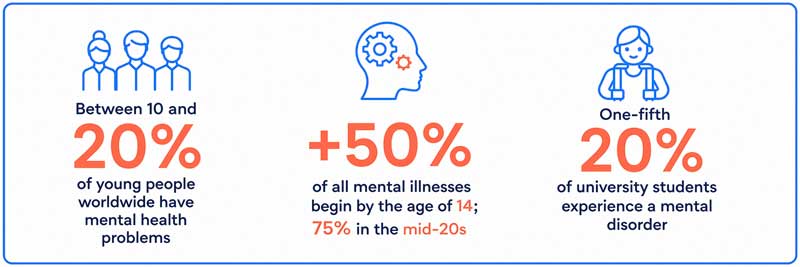
Significant mental health problems can and do occur in young children. Research shows that there is a crisis in child mental health, with an estimated 16% of children suffering from some form of mental disorder. A child’s emotional health and wellbeing influences their cognitive development and learning, as well as their mental wellbeing in adulthood.
Academic achievement is highly prioritised in many societies around the world, including Hong Kong, which can overshadow the importance of mental health awareness. However, there is growing recognition of SEMH, with some governments implementing policies to integrate mental health education into schools.
Despite these efforts, stigma surrounding mental health remains a significant barrier, and resources can be limited. Therefore, it is incredibly important that we as educators are tackling this issue head on in our classrooms, supporting our learners to build positive mental wellbeing.
Types of Social, Emotional and Mental Health Needs
Children can suffer from a variety of social and emotional difficulties, mental health issues or poor wellbeing. SEMH needs include:
- Anxiety or depression
- Self-harming
- Substance misuse
- Mental disorders
- Eating disorders
- Unexplainable physical symptoms like headaches and skin conditions
- Attention deficit disorder (ADD) or attention deficit hyperactivity disorder (ADHD)
- Attachment disorder
Recognising Poor SEMH
It can be difficult to recognise poor mental health, particularly in young children, because of their stage of development. Mental illness in children may look very different to that of an adult. Children with social, emotional and mental health needs may:
- Be withdrawn
- Display challenging or disturbing behaviour
- Exhibit inappropriate emotional responses
- Have problems with family or friends
- Have problems with eating, trouble talking, or sleeping
- Feel angry or struggle to control behaviour or temper
- Find it hard to concentrate or get on with friends
Supporting Social, Emotional and Mental Health
Social, Emotional, and Mental Health (SEMH) support is not a separate intervention reserved for a few students – it's a foundational approach that benefits every learner in the classroom. Whether you're teaching in a kindergarten where young children grapple with separation anxiety, a primary school or learning centre where academic pressure is mounting, or a secondary school where adolescents navigate complex peer relationships, understanding how to recognise and respond to SEMH needs reshapes the learning environment for everyone.
Practical Strategies: Real Classroom Examples
Scenario 1: Early Years Separation Anxiety
The scenario: It's Monday morning in a K1 classroom. A young learner arrives and stands frozen at the entrance, clutching their backpack. When their helper tries to leave, the learner begins to cry. The helper leaves quickly, and now the learner is sobbing, unable to engage with any activity.
What not to do: “Stop crying right now. Your helper has left and she's not coming back until 3 o'clock. You're a big girl now and need to be brave. Everyone else is happy and working nicely. If you keep crying, you won't get a sticker today. Come on, go play with the blocks like the other children."
Why this doesn’t work: The teacher is dismissing the learner’s genuine distress, sending the message that their feelings are wrong. Shame and pressure (“big girl”, “brave”, comparison to peers) increase anxiety rather than reduce it. There's no acknowledgment of the transition difficulty or the real loss the learner is experiencing. Punishment (withholding rewards) makes them feel worse about their emotions. Other children learn that expressing emotions leads to criticism, so they suppress their own feelings. The learner's anxiety actually increases because they now feel alone with their feelings and worried about disappointing the teacher.
How to support:
Use an approach that draws on Attachment Mentoring (recognising that secure relationships are the foundation for learning), Emotional Coaching (validating feelings while guiding behaviour), Zones of Regulation (helping children recognise and name emotional states), and Trauma Informed Practice (understanding that transitions can feel like loss for young children).
- Get down to eye level and maintain calm, warm body language. She needs to see a regulated adult to help regulate herself.
- Name the emotion without judgment: "You're feeling sad and worried." This validates her experience and helps her develop emotional vocabulary.
- Provide physical comfort if she's receptive – a hand on her shoulder or sitting beside her. For children with trauma histories, always ask first: "Would a hug help, or would you like me to sit nearby?"
- Acknowledge the transition: "Coming to school without our special adult is hard. It's normal to feel worried when someone we love leaves us."
- Offer a concrete comfort object: "Let's put this photo of your family in your cubby so you can see it whenever you need to remember they're thinking of you. And you can hold my hand while we walk to an activity."
- Create a predictable routine: "Every morning, we'll do three things: say goodbye to your helper, look at your family photo, and then you can choose – do you want to paint or build blocks first?"
- Use "Zones of Regulation" language (age-appropriately): "Your body is in the Blue Zone right now, and it's feeling very big emotions. Let's go to our calm corner and do some slow breathing together. Watch my tummy – in through the nose, out through the mouth."
- Normalise her experience for the whole class (later, when she is calm): "Everyone feels worried sometimes, especially when things change. Our friend is learning to be brave by feeling her feelings and letting them be there."
Key takeaway: Separation anxiety in early years is not a behavioural problem to punish – it's an emotional need to meet. By validating a child’s feelings, providing a secure relationship, and creating predictable routines, the teacher helps her develop emotional resilience that benefits her learning across all areas. Every child in the classroom learns that feelings are safe, that adults can help, and that it's okay to need support. This foundation improves not just the child’s experience, but the emotional climate of the entire classroom.
Scenario 2: Primary ADHD and Task Initiation
The scenario: It's Wednesday afternoon in a Primary 4 literacy lesson. A primary learner with ADHD has been sitting for 5 minutes without starting their story. When the teacher reminds them to focus, the learner snaps, "This is stupid! I can't do this!" and throws their pencil down.
What not to do: The teacher announces loudly, "That's completely unacceptable behaviour. You're going to sit here and finish this story even if it takes all afternoon. Everyone else, ignore him and keep working."
Why this doesn’t work:
- Ignores the neurological reality of ADHD: The learner’s inability to start the task isn't wilful defiance – his brain genuinely struggles with executive function and impulse control. Punishment doesn't fix neurology.
- Shame increases dysregulation: Being called out publicly and shamed makes a learner’s nervous system MORE activated, not less. He can't access his prefrontal cortex (the thinking brain) when he's in fight-or-flight mode.
- Damages the relationship: The learner now sees the teacher as an adversary, not an ally. This relationship damage makes future learning harder.
- Creates learned helplessness: The individual is learning "I'm bad at this, I can't do this, adults won't help me." This belief becomes self-fulfilling.
- Disrupts the whole class: Other children are now anxious and distracted by the conflict. Some are learning to hide their own struggles to avoid similar treatment.
- Misses the real problem: The teacher doesn't realise the learner needs help with task initiation, not punishment for "attitude."
How to support:
- Stay calm and lower your voice (opposite of the unhelpful response). A child’s dysregulation is ‘contagious’ – a regulated adult can help him regulate.
- Validate the emotion, not the behaviour: "You're feeling frustrated – that's okay. Throwing the pencil isn't how we handle frustration, but I understand you're stuck."
- Move away from the audience. Take the learner to a quieter area of the classroom or step outside the door briefly. Public correction increases shame; private support increases openness.
- Use "Zones of Regulation" language: "Your body is in the Yellow or Red Zone right now – your feelings are big. Let's do some slow breathing so your brain can think clearly again." Do a few rounds of box breathing together: in for 4, hold for 4, out for 4, hold for 4.
- Problem-solve the task barrier: "Let me show you how we can break this down. Instead of 'write a story,' let's start smaller. First, we'll think of one character. Who could your story be about?" This addresses the real issue – task initiation difficulty.
- Provide scaffolding: "Here's a story starter: 'One day, _____ found something surprising.' Can you finish that one sentence?" The learner needs external structure to compensate for executive function challenges.
- Build in movement and sensory breaks: "After you write two sentences, you can do 10 jumping jacks. Then two more sentences. Your body needs movement – that's not bad, that's just how your brain works."
- Use specific, genuine praise: "I noticed you took three deep breaths and came back to try again. That's exactly what I do when I'm frustrated. You're learning how to handle big feelings."
Key takeaway: The learner’s "behaviour" wasn't the problem; that was his way of expressing himself. His dysregulation and executive function challenges are the problem. By staying calm, validating his feelings, addressing the real barrier (task initiation), and providing scaffolding, the teacher helped him succeed. This approach benefits the learner, but it also creates a safer, more focused classroom for everyone. When students see that struggling is met with support and problem-solving, not shame, they're more willing to take academic risks and ask for help. The entire class becomes more resilient.
Scenario 3: Adolescent Anxiety and Avoidance
The scenario: It's Tuesday morning in a Secondary English class. An adolescent learner becomes pale when the teacher announces a public speaking assignment. They ask if they can do something else. The teacher responds, "You're smart, so you should be able to handle this." Over the next week, the learner's anxiety escalates: they're not sleeping, avoiding friends, and missing class. The teacher calls them out for missing class, and the learner becomes tearful. The teacher responds, "This is just a presentation. You're being dramatic. Everyone has to do this. Stop making excuses and get your work done."
Why this doesn’t work:
- Invalidates her experience: Telling her "it's just a presentation" dismisses the very real physiological experience of anxiety. Her panic is not a choice or an exaggeration.
- Increases shame and isolation: She now feels that her anxiety is weak, embarrassing, or something to hide. She stops seeking help and isolates further.
- Damages trust in adults: She needed an adult to understand her, not minimise her. This damages her trust in the teacher and makes her less likely to reach out to other adults who could help.
- Misses the underlying mental health concern: The teacher is treating avoidance as a behaviour problem when it's actually a symptom of anxiety (possibly panic disorder). Without addressing the root cause, the situation will worsen.
- Escalates the anxiety: Pressure and shame are exactly what make anxiety worse. Her nervous system is now even more activated.
- Creates a mental health crisis: Untreated adolescent anxiety often progresses to depression, self-harm, or suicidal ideation. Early intervention is critical.
How to support:
Start the conversation with empathy: "I'm glad you told me you're feeling anxious about presentations. That takes courage. Anxiety is something lots of people experience, and it's not a weakness. Let's talk about what's making this feel so big, and we'll figure out a plan together."
- Validate without minimising: "I hear you saying presentations feel really scary right now. That's real, and I take it seriously. Let's understand what's happening."
- Explore the root cause with curiosity, not judgment: "Can you tell me more? What specifically about presenting feels scary?" This opens a conversation rather than shutting it down. She might reveal: "I feel like everyone will judge me," or "I'm worried I'll mess up and disappoint my parents," or "I've been feeling really anxious about lots of things lately."
- Normalise anxiety as a nervous system response: "Your brain is trying to protect you by sending danger signals. That's what anxiety is – your nervous system being overprotective. It's not your fault, and it's not weakness."
- Use Trauma-Informed Practice language: "Your body is in fight-or-flight mode. When that happens, our thinking brain goes offline and we can only focus on the threat. We need to calm your nervous system first, and then we can tackle the task."
- Teach somatic regulation tools: "Let's try something. Close your eyes and notice: where do you feel the anxiety in your body? Your chest? Your stomach? Now, let's do some box breathing together. This actually calms your nervous system." Practice together: in for 4, hold for 4, out for 4, hold for 4. Do 5-10 rounds.
- Offer choice and agency: "I'm not going to force you to do the presentation the way everyone else is doing it. But I also don't want anxiety to stop you from learning. Let's brainstorm options. What would help you feel more in control?"
- Provide scaffolding and modifications: Options might include presenting to the teacher first (smaller audience), presenting to a small group instead of the whole class, presenting with a partner, recording the presentation, or presenting to the class but with notes/slides to refer to. The goal is to help her succeed, not to punish her for anxiety.
- Connect her to additional support: "I'm wondering if you've been feeling anxious about other things too? Because what you're describing sounds like it might be bigger than just this presentation. Would you be open to talking to someone about it? Counsellors have really good tools for managing anxiety."
Key takeaway: Anxiety isn’t a behaviour problem – it is a signal that a learner needs support. By validating, teaching coping strategies, providing scaffolding, and connecting to professional help, the teacher helped them develop resilience while helping to complete the assignment, and is potentially identifying a real mental health struggle that requires immediate intervention. In addition, the whole classroom benefits from reduced stigma around mental health.
From Surviving to Thriving
Teaching learners with social, emotional, and mental health needs means stepping into the uncomfortable reality that sits beneath what we see in our classrooms. It means recognising that the withdrawn child, the outburst at the desk, the absence escalating week by week – these are not behaviour problems to stamp out, but signals of nervous systems crying for help. In Hong Kong's relentless academic landscape, where pressure mounts and struggles are hidden away, this recognition becomes an act of courage.
Supporting social, emotional and mental health is foundational work. It is the bedrock upon which communication flourishes, upon which learning becomes possible, upon which every other area of SEN can develop. When we help our learners move from survival mode – where anxiety, shame, and dysregulation dominate – to genuine resilience and wellbeing, we give them something far more valuable than academic achievement: we give them the capacity to thrive. And in doing so, we change not just individual lives, but the very culture of our schools.
More from Amy's Inclusive Teaching series
Introduction to Inclusive Education for Learners with SEN
Identifying and Supporting SEN in the Classroom
How to Support SEN – Communication and Interaction Needs